Test Plan, Strategy, RTM and Metrics
Harry
· 21 Sep 2026
· 2 views
Log in to track your progress and mark lessons complete.
Sponsored
 Browse All Tutorials
Explore →
Browse All Tutorials
Explore →
Test Plan
The project-level document: scope, objectives, schedule, resources, environments, entry/exit criteria, risks and deliverables. One plan per release.
Test Strategy
The organisation-level approach reused across projects: levels of testing, automation tools, environments, defect process. Plan says what for this release; strategy says how we always test.
Test Suite and Execution
Group cases into suites (smoke, regression, sprint). Execute in cycles, record pass/fail/blocked with evidence, and track the suite pass rate per build.
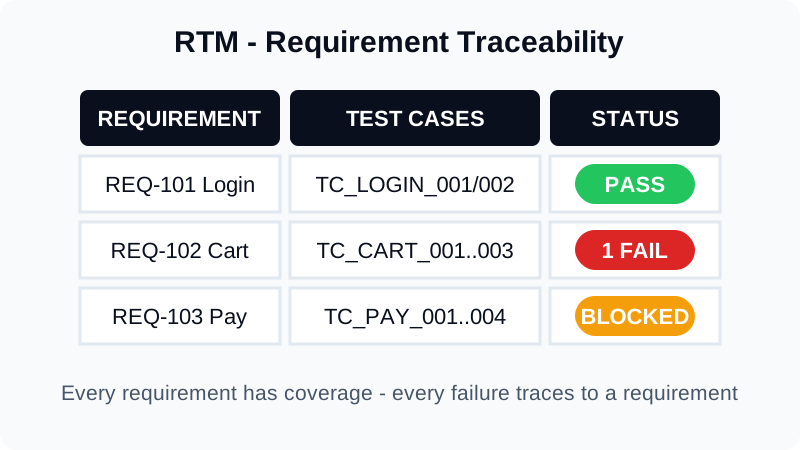
Requirement Traceability Matrix (RTM)
REQ-101 Login --> TC_LOGIN_001, TC_LOGIN_002 --> PASS
REQ-102 Cart  --> TC_CART_001..003          --> 1 FAIL (BUG-77)
RTM proves every requirement has coverage and every failure traces to a requirement.
Test Metrics and Reports
- Pass rate - passed / executed.
- Defect density - defects per module or KLOC.
- Defect leakage - bugs found by users after release.
- MTTR - mean time to fix and retest.
Test Closure
Archive cases, publish the summary report (scope, coverage, defects, risks), hold a retrospective, and get formal sign-off.
- No plan survives without entry/exit criteria.
- RTM is your audit proof of coverage.
- Report metrics, not just bug counts.