What Is SVN? (Apache Subversion)
Harry
· 13 Sep 2026
· 1 views
Centralized Version Control
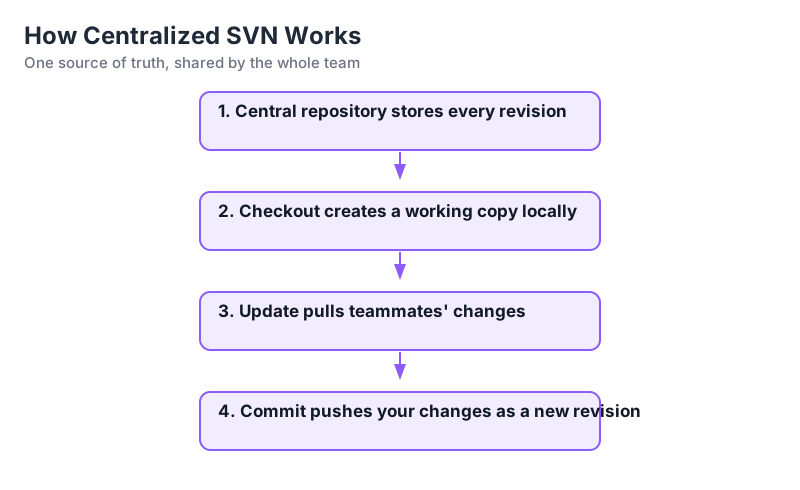
Subversion, usually called SVN, is a centralized version control system. There is a single server that holds the complete history, and users check files out, work locally, and commit their changes back to the server.
SVN vs Git
SVN keeps one authoritative repository; Git gives every clone a full copy of history. That means SVN is simpler to reason about, integrates cleanly with file locks and shops that need a single source of truth. Git supports offline commits, full branching independence and a denser history model.
Why Teams Still Choose SVN
- Simple model - One server, one version of the truth.
- File locking - Unique to SVN, great for binaries.
- Access control - Fine-grained per-path permissions.
- Mature tooling - TortoiseSVN and IDE integrations.
Core Concepts
A repository stores revisions. Users operate on a working copy, a local snapshot. Update pulls the latest changes; commit pushes yours. Revisions are server-wide numbers, so revision 42 means the repo state after 42 commits.
Key Points
- SVN is centralized: one repository serves everyone.
- Working copies and commits are the everyday workflow.
- Locks and per-path access control are differentiators.
- Choose SVN when a single source of truth matters most.