Concurrency: Goroutines and Channels
Harry
· 14 Sep 2026
· 1 views
Advertisement

Goroutines
A goroutine is a function running concurrently, started by putting go before a call. Goroutines are extremely lightweight – you can run thousands – because the Go runtime multiplexes them onto a few OS threads:
go doWork()            // runs concurrently; main continues
go fmt.Println("hi")   // starts another goroutine
Channels connect goroutines
Go's motto is “do not communicate by sharing memory; share memory by communicating.” A channel is a typed pipe that goroutines use to send and receive values safely:
ch := make(chan int)

go func() {
    ch <- 42          // send
}()

result := <-ch        // receive (blocks until a value arrives)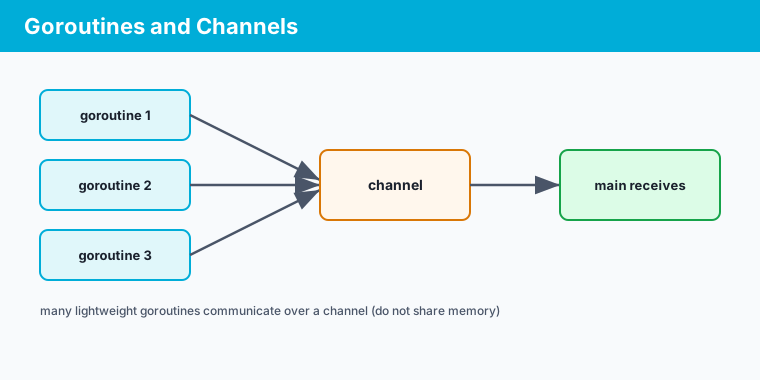
Waiting for many goroutines
A sync.WaitGroup lets the main function wait for a set of goroutines to finish:
var wg sync.WaitGroup
for _, url := range urls {
    wg.Add(1)
    go func(u string) {
        defer wg.Done()
        fetch(u)
    }(url)
}
wg.Wait()   // block until all are done
select
select waits on multiple channel operations at once – the basis of timeouts and coordinating several channels:
select {
case msg := <-ch:
    fmt.Println(msg)
case <-time.After(time.Second):
    fmt.Println("timed out")
}
Key points
- Start concurrent work with
go; goroutines are cheap and numerous. - Channels safely pass typed values between goroutines – share by communicating.
- Use a
WaitGroupto wait for multiple goroutines to complete. selectwaits on several channels at once, enabling timeouts.