What TypeScript Is and Why Use It
Harry
· 14 Sep 2026
· 3 views
Advertisement

JavaScript with types
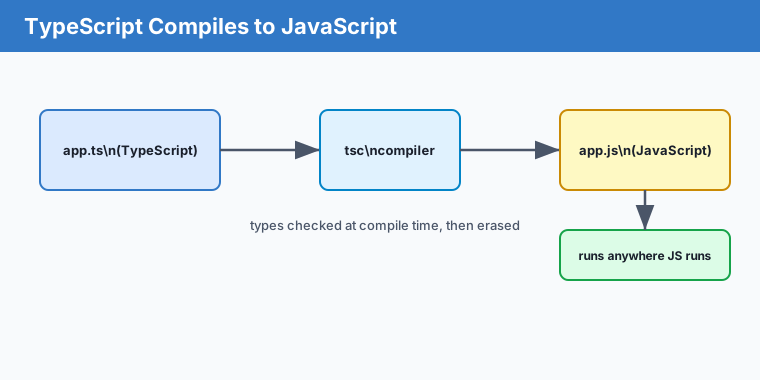
TypeScript is a superset of JavaScript that adds optional static types. Every valid JavaScript file is already valid TypeScript; you opt into types where they help. A separate step, the TypeScript compiler (tsc), checks those types and then emits ordinary JavaScript that runs in any browser or Node.js.
Catching bugs before runtime
JavaScript only discovers type mistakes when the code runs – often in production. TypeScript surfaces them in your editor as you type:
function total(price: number, qty: number) {
  return price * qty;
}

total(10, 5);       // 50
total("10", 5);     // Error: string is not a number
Types are erased
Types exist only at compile time. The emitted JavaScript contains no type annotations at all – there is zero runtime cost. This is why TypeScript runs anywhere JavaScript does, with the same performance.
Why teams adopt it
- Fewer bugs: whole categories of errors become compile errors.
- Better tooling: precise autocomplete, safe refactoring, jump-to-definition.
- Self-documenting code: signatures state exactly what a function expects and returns.
- Scales: large codebases stay maintainable as teams grow.
Key points
- TypeScript is JavaScript plus optional static types.
- The
tsccompiler checks types, then emits plain JavaScript. - Types are erased at compile time – no runtime overhead.
- It reduces bugs and powers strong editor tooling, especially on large projects.