Why Spring Security and How It Works
Harry
· 14 Sep 2026
· 2 views
Advertisement

What Spring Security gives you
Spring Security is the standard framework for securing Spring applications. It handles the hard, easy-to-get-wrong parts of security – login, session management, password hashing, protection against CSRF and common attacks, and fine-grained access control – so you do not build them yourself.
Authentication vs authorization
Two words that sound alike but mean different things, and every security discussion depends on the distinction:
- Authentication – who are you? Verifying identity, e.g. checking a username and password.
- Authorization – what are you allowed to do? Deciding whether an authenticated user may access a resource.
The filter chain
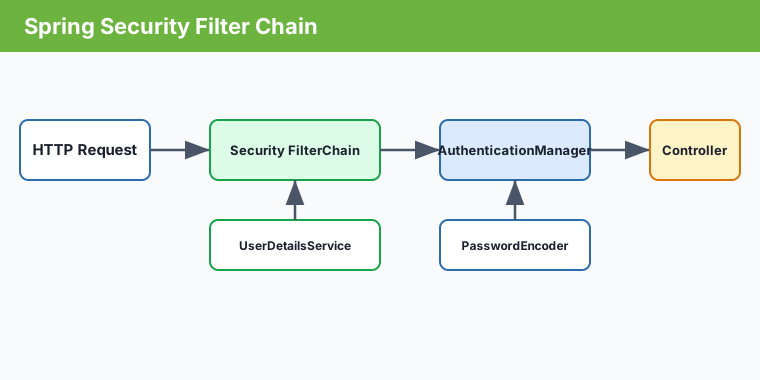
Spring Security works as a chain of servlet filters that every request passes through before reaching your controller. Each filter has one job – read the session, check a token, enforce authorization – and can stop the request early (for example, redirecting an anonymous user to the login page).
The core objects
- SecurityFilterChain – the bean where you declare your rules.
- AuthenticationManager – verifies credentials.
- UserDetailsService – loads a user (and their roles) by username.
- SecurityContext – holds the authenticated user for the duration of the request.
Key points
- Spring Security provides login, password hashing, attack protection and access control.
- Authentication proves identity; authorization decides permissions.
- Requests flow through a chain of single-purpose filters before your controller.
- You configure security by defining a
SecurityFilterChainbean.