NoSQL and the Document Model

What MongoDB is
MongoDB is a document database. Instead of rows in fixed tables, it stores documents – flexible, JSON-like objects – grouped into collections. A document can hold nested objects and arrays, so related data often lives together in one record rather than being spread across many joined tables.
A document
{
  "_id": ObjectId("64af12..."),
  "name": "Ada Lovelace",
  "roles": ["admin", "developer"],
  "address": { "city": "Pune", "zip": "411001" },
  "active": true
}
Behind the scenes MongoDB stores this as BSON (Binary JSON), which adds types like dates and the 12-byte ObjectId that every document gets as its primary key in the _id field.
How it maps to SQL
If you know relational databases, this translation makes MongoDB click:
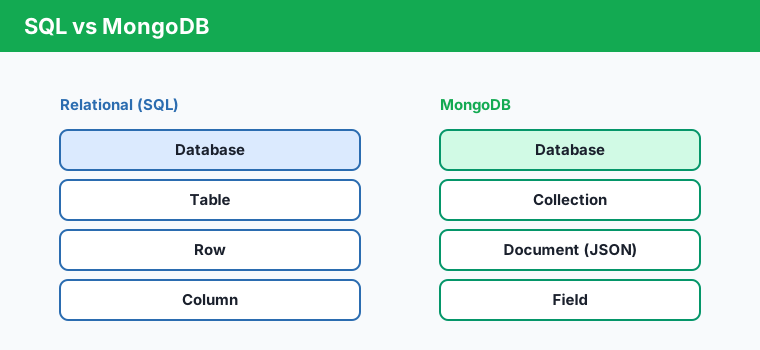
- Database → Database
- Table → Collection
- Row → Document
- Column → Field
Flexible schema
Documents in the same collection do not have to share the same fields. This makes iterating fast – you can add a field to new documents without a migration. The trade-off is that consistency becomes the application’s responsibility, so teams usually still agree on a schema and enforce it in code or with validation rules.
Key points
- MongoDB stores flexible, JSON-like documents (BSON) in collections.
- Documents can nest objects and arrays, keeping related data together.
- Table→collection, row→document, column→field maps SQL thinking onto Mongo.
- Schemas are flexible; enforce consistency in the app or via validation.