Null Safety: Kotlin's Killer Feature
Harry
· 14 Sep 2026
· 3 views
Advertisement

Two kinds of types
In Kotlin, a type either can hold null or it cannot, and that difference is enforced by the compiler. A plain String can never be null; a String? (with the question mark) can.
var a: String = "hello"
a = null            // compile error!

var b: String? = "hello"
b = null            // fine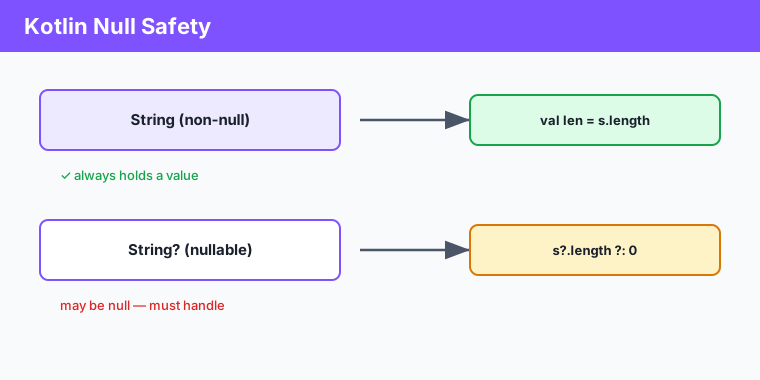
Working with nullable values
The compiler forces you to handle the null case before using a nullable value. Three tools do the job:
val len = b?.length            // safe call: null if b is null
val len2 = b?.length ?: 0      // Elvis operator: default when null
b?.let { println(it.length) } // run a block only if not null?.is the safe call – it returns null instead of throwing.?:is the Elvis operator – supply a fallback value.letruns a block only when the value is present.
The not-null assertion (use sparingly)
!! forces a nullable to non-null and throws if it really is null. It is an escape hatch – reaching for it often means the type should not have been nullable:
val forced = b!!.length // throws NPE if b is nullWhy this matters
Because nullability is part of the type, whole classes of runtime crashes become compile errors. You cannot accidentally call a method on something that might be null – the compiler stops you until you have handled it.
Key points
Typecan never be null;Type?can – the compiler enforces the difference.- Use
?.for safe calls and?:to supply defaults. letruns code only when a value is present.- Avoid
!!– needing it usually signals a design that should be non-null.