Why Hibernate and not JDBC?
- JDBC maps Java classes to database tables (and from Java data types to SQL data types)
- Hibernate automatically generates the SQL queries.
- Hibernate provides data query and retrieval facilities and can significantly reduce development time otherwise spent with manual data handling in SQL and JDBC.
- Makes an application portable to all SQL databases.
Hibernate vs. JDBC (an example)
JDBC tuple insertion
st.executeUpdate("INSERT INTO book VALUES("Harry Potter","J.K.Rowling"));
Hibernate tuple insertion
session.save(book1);
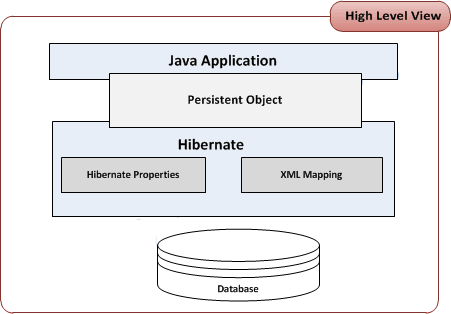
High-Level View
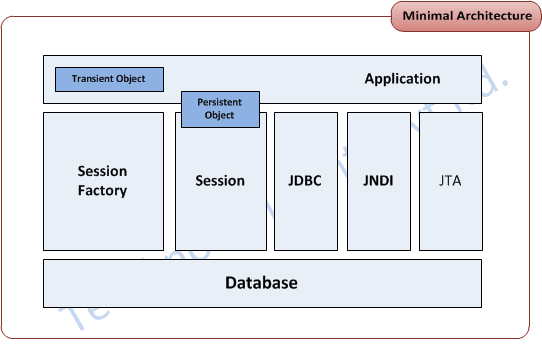
Minimal Architecture
- The "minimal" architecture has the application manage its own JDBC connections and provide those connections to Hibernate; additionally the application manages transactions for itself.
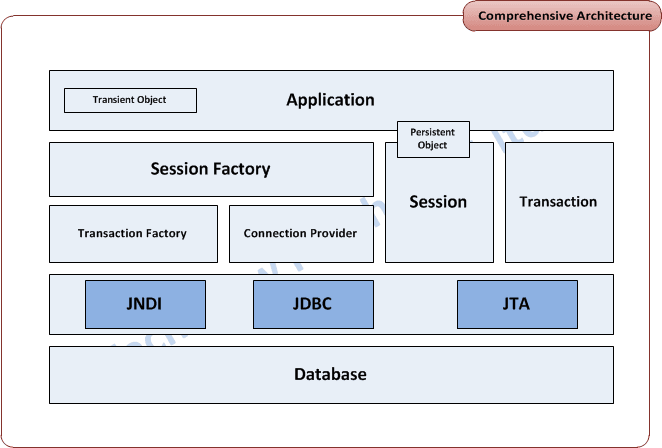
Comprehensive Architecture
- The "comprehensive" architecture abstracts the application away from the underlying JDBC/JTA APIs and allows Hibernate to manage the details.